| ISSN INTERNATIONAL |
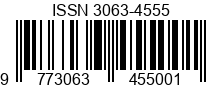
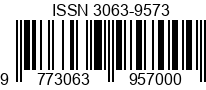
| Onlie ISSN | Print ISSN |
 |
 |
| ISSN INDONESIA |
| Online ISSN | Print ISSN |
 |
 |
| IN COLLABORATION WITH |

Indonesian Journal of Research in Islamic Studies (IJRIS) editors are experts in their fields and charge of the peer-review process and the journal's content. Their role is to handle manuscript peer review, make paper acceptance or rejection recommendations, and attract high-quality submissions. IJRIS has established a policy on editor guidelines, based on the following authoritative sources:
B. Duties of Editors
1. Publication Decisions:
The editor of the Indonesian Journal of Research in Islamic Studies (IJRIS) is solely responsible for deciding which submitted manuscripts should be published. These decisions must be based on the scholarly merit and relevance of the work to researchers and readers. The editor may be guided by the journal’s editorial board policies and legal considerations, such as libel, copyright infringement, and plagiarism. The editor may also consult with other editors or reviewers when making these decisions.
2. Peer Review:
The IJRIS editor shall ensure that the peer review process is fair, unbiased, and timely. Research articles must typically be reviewed by at least two external and independent reviewers, and where necessary, the editor should seek additional opinions.
The editor shall select reviewers with appropriate expertise in the relevant field and shall follow best practices to avoid selecting fraudulent reviewers. All disclosures of potential conflicts of interest and suggestions for self-citation made by reviewers will be reviewed by the editor to assess any potential bias.
3. Fair Play:
The IJRIS editor shall evaluate manuscripts solely on intellectual content without regard to race, gender, sexual orientation, religious belief, ethnic origin, citizenship, or political philosophy of the authors.
The journal’s editorial policies should promote transparency and honest, complete reporting. The editor shall ensure that both peer reviewers and authors clearly understand the expectations placed upon them. All journal communications shall be conducted through the journal’s standard electronic submission system.
The editor, together with the publisher, shall establish a transparent mechanism for authors to appeal editorial decisions.
4. Confidentiality:
The IJRIS editor must maintain the confidentiality of all submitted materials and communications with reviewers, unless otherwise agreed with the relevant authors and reviewers. In exceptional cases, and in consultation with the publisher, limited information may be shared with editors of other journals, institutions, or organizations investigating suspected research misconduct to facilitate ethical investigations.
Unless the journal operates an open peer-review system or reviewers have agreed to disclose their identities, the editor must protect the anonymity of reviewers.
Unpublished material disclosed in manuscripts must not be used by editors for their own research without the author’s explicit written consent. Privileged information or ideas obtained through peer review must be kept confidential and must not be exploited for personal gain.
5. Use of Generative AI and AI-Assisted Technologies in the Journal Editorial Process:
A submitted manuscript must be treated as a confidential document. Editors must not upload any manuscript content into generative AI tools, as this may violate authors’ confidentiality and proprietary rights and, if the manuscript contains personally identifiable information, could breach data privacy laws.
This confidentiality extends to all communications regarding the manuscript, including notification or decision letters, which may contain sensitive information about the manuscript and authors. Editors should therefore avoid uploading such correspondence into AI tools, even for language or readability improvements.
Peer review is central to the scientific process, and IJRIS adheres to the highest standards of integrity in this regard. The editorial evaluation of a scientific manuscript requires critical thinking and original judgment responsibilities that lie solely with human editors. Generative AI or AI-assisted technologies must not be used by editors to assist in manuscript evaluation or decision-making, as these technologies may generate incomplete, inaccurate, or biased conclusions. The IJRIS editor remains fully responsible and accountable for the editorial process, final decisions, and communications with authors.
The IJRIS Editors are advised to consult the journal’s detailed policy on the use of generative AI technologies (Visit the generative AI policies for journals page to review our generative AI policy for editors).
6. Declaration of Conflicts of Interest:
Any potential editorial conflicts of interest should be declared to the publisher in writing prior to the appointment of the IJRIS editor, and updated whenever new conflicts arise. The publisher may publish such declarations in the journal.
The IJRIS editor must not be involved in decisions regarding manuscripts they have authored, manuscripts authored by family members or colleagues, or manuscripts related to products or services in which the editor has a personal interest. Such submissions must undergo the journal’s standard procedures, with peer review handled independently of the relevant author/editor and their research groups. A clear statement to this effect must be included in any such published manuscript.
The IJRIS editor shall enforce the journal’s policy regarding the disclosure of potential conflicts of interest by authors and reviewers.
7. Vigilance over the Published Record:
The IJRIS editor should actively safeguard the integrity of the published record by reviewing and assessing reported or suspected misconduct including research, publication, reviewer, and editorial misconduct in collaboration with the publisher (or society).
This process generally involves contacting the authors and carefully considering the complaint or claims made. It may also involve communication with relevant institutions and research bodies. The IJRIS editor shall utilize the publisher’s misconduct detection systems, such as plagiarism checks, as appropriate.
When presented with convincing evidence of misconduct, the IJRIS editor should coordinate with the publisher (and/or society) to promptly issue corrections, retractions, expressions of concern, or other appropriate amendments to the scholarly record.
Choosing Reviewers
Review Process
Decisions
Open Journal System (OJS) Editor's Guide
STAGE 1 – Submitting Articles for Review by Reviewers
STAGE 2 – Receive Review Results and Send Review Results
STAGE 3 – Article Editing
| ISSN INTERNATIONAL |
| Onlie ISSN | Print ISSN |
|
|
| ISSN INDONESIA |
| Online ISSN | Print ISSN |
|
|
| IN COLLABORATION WITH |

| INDEXING |
 |
 |
 |
 |
 |
 |
| JOURNAL TEMPLATE |


| Contributing Countries: 8 Number of Contributors: 70 |
 |
Indonesia | (58) |
 |
Malaysia | (2) |
 |
Nigeria | (3) |
 |
India | (3) |
 |
Turkey | (1) |
 |
Malawi | (1) |
 |
Philippines | (1) |
 |
Egypt | (1) |

Indonesian Journal of Research in Islamic Studies (IJRIS) by Academia Edu Cendekia Indonesia (AEDUCIA) is licensed under Creative Commons Attribution-ShareAlike 4.0 International (CC BY-SA 4.0) 


JOURNAL's EDITORIAL OFFICE:
Email: ijris.ojs@aeducia.org, ijris.ojs@gmail.com. Mailing Address: Jl. Permana Barat IV No. 3. Kelurahan Citeureup, Kecamatan Cimahi Utara, Kota Cimahi, Bandung, Provinsi Jawa Barat, Kodepos: 40512, Indonesia. Publisher: Academia Edu Cendekia Indonesia (AEDUCIA). Email: admin@aeducia.org, cv.aeducia@gmail.com.
Phone (WhatsApp): +62857-9388-6665. Website: https://aeducia.org.
Visit the Journal Publishing Office Location:
