| ISSN INTERNATIONAL |
| Online ISSN | Print ISSN |
 |
 |
| ISSN INDONESIA |
| Online ISSN | Print ISSN |
 |
 |
| IN COLLABORATION WITH |

| JOURNAL INFORMATION | ||
| Journal Title | : Indonesian Journal of Character Education Studies |  |
| Journal Initials | : IJCES | |
| Journal Abbreviation | : Indones. J. Character Educ. Stud. | |
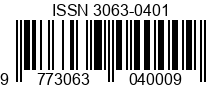
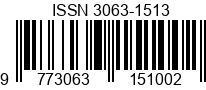
| ISSN International | : Online ISSN 3063-0401 - Print 3063-1513 | |
| Publication Frequency | : Biannually (i.e., in March and September) | |
| Language | : English, Indonesia | |
| DOI Prefix | : 10.64420/ijces by Crossref (Members ID: 53855) | |
| Focus & Scope | : Character Education | |
| Citation Analysis | : Google Scholar, Dimensions | |
| Indexing & Abtracting | : ESJI, BASE, EuroPub, GARUDA View More | |
| License Terms | : Creative Commons Attribution-ShareAlike 4.0 International | |
| System & Management | : Open Journal System (OJS) - Open Access Journals | |
| OAI | : index.php/ijces/oai | |
| Publisher | : Academia Edu Cendekia Indonesia (AEDUCIA) | |
IJCES Focus and Scope Alignment with the All Science Journal Classification (ASJC) System:
| ASJC Code | ASJC Category | Subject Area | Scope Coverage |
| 3304 | Education | Social Sciences & Humanities | This scope focuses on character education and its approaches, including various character education models, pedagogies, and approaches used to teach moral values, ethics, and positive behavior to students |
| 3204 | Developmental & Educational Psychology | Social Sciences & Humanities | This scope focuses on aspects of developmental and educational psychology, particularly in relation to character development and emotional intelligence within educational contexts. It also explores how students' character develops across various educational settings, both in schools and communities, and examines how emotional intelligence contributes to character formation. |
| 3301 | Social Sciences (miscellaneous) | Social Sciences & Humanities | This scope focuses on the societal impacts of character education and the development of ethics and morals within a broader social context. It also examines how character education influences society and contributes to the development of ethical and moral values in social life |
IJCES adopts the Scopus Journal Subject Classification (ASJC) system to organize and categorize research topics. By following the ASJC system, IJCES ensures that its content is clearly structured, making it easier for authors to access and utilize information relevant to the Focus and Scope of IJCES.
 Registration and Login are required to submit items online and to check the status of current submissions.
EDITORIAL PROCESS: IJCES follows a double-blind peer-review to ensure academic integrity, quality, and originality. Manuscripts are screened for relevance, originality, and alignment with the journal's scope and ethics, then reviewed by the editorial team and peer reviewers for quality. The process ensures fair, objective, and consistent evaluation
| EDITORIAL PROCESS | |||
| Time to First Decision | Review Time | Submission to Acceptance | Acceptance to Publication |
| 1-2 Weeks | 2-10 Weeks | 2-10 Weeks | 1-2 Weeks |
PUBLISHING SYSTEM AND PROCESS: IJCES utilizes Open Journal Systems (OJS), a platform that streamlines the editorial workflow by providing tools for submission, peer review, and publication. It also supports the open-access dissemination of scholarly content (see Publishing System and Process).
| ISSN INTERNATIONAL |
| Online ISSN | Print ISSN |
|
|
| ISSN INDONESIA |
| Online ISSN | Print ISSN |
|
|
| IN COLLABORATION WITH |
| INDEXING & ABSTRACTING |
 |
 |
 |
 |
 |
 |
| JOURNAL METRICS |
| Days to First Decision: | 14 days |
| Review Speed: | 20 days |
| Acceptance Rate: | 75% |
| Rejection Rate: | 0% |
| Issue Per Year: | 2 |
| Number of Volumes: | 3 |
| Number of Issues: | 6 |
| Number of Articles: | 30 |
| Number of Contributors: | 56 |
| Contributing Countries: | 2 |
| No. of Scopus Citations: | 0 |
| No. of Dimensions Cite: | 21 |
| No. of Google Citations: | 161 |
| Google h-index: | 6 |
| Google i10-index: | 4 |
| Update: September 29, 2026 |
| JOURNAL TEMPLATE |


Indonesian Journal of Character Education Studies (IJCES) by Academia Edu Cendekia Indonesia (AEDUCIA) is licensed under Creative Commons Attribution-ShareAlike 4.0 International (CC BY-SA 4.0) 


JOURNAL's EDITORIAL OFFICE:
Email: ijces.ojs@aeducia.org, ijces.ojs@gmail.com. Mailing Address: Jl. Permana Barat IV No. 3. Kelurahan Citeureup, Kecamatan Cimahi Utara, Kota Cimahi, Bandung, Provinsi Jawa Barat, Kodepos: 40512, Indonesia. Publisher: Academia Edu Cendekia Indonesia (AEDUCIA). Email: admin@aeducia.org, cv.aeducia@gmail.com.
Phone (WhatsApp): +62857-9388-6665. Website: https://aeducia.org.
Visit the Journal Publishing Office Location:
